
Williamson County Wanted Fugitives
No single Williamson County wanted-fugitives gallery exists online. The sheriff's office sends people elsewhere. Its Report a Crime page points to the Texas Ten Most Wanted list, and the local Williamson County Crime Stoppers wanted-suspects page serves as the working hometown listing. Remember what Crime Stoppers actually is: a wanted-person program with tips and rewards, not a warrant desk and not the county jail roster.
Some profiles are current and some sit archived long after a fugitive was found, so check the date and status before assuming anything. The photos belong to the original program, and no booking-picture collection is copied here. For a specific person's custody status, the Williamson County booking and roster page explains the county record route, which beats guessing from a wanted poster.
Safety note. Do not approach, follow, or try to identify a person from a wanted listing. Pass information through Crime Stoppers, law enforcement, or 911 when an emergency is occurring.
Williamson County Wanted Profile Fields
A Crime Stoppers profile can carry a lot of detail. Expect a photograph, some personal descriptors, and information credited to the requesting agency. That can separate one person from another with a similar name. Still, each field has limits. A profile is no substitute for an official identity check. An old address, a physical description, or an alias should never decide for you that two people are the same person.
| Field | What the Williamson County profile may show |
|---|---|
| Name and alias | The name used by the program and, when available, another reported name. |
| Age or date of birth | An identifying detail that still requires care with similar names. |
| Sex and race | Descriptive fields attributed to the profile, not proof of identity by themselves. |
| Height, weight, hair, and eyes | Physical-description fields that can change or be incomplete. |
| Marks or tattoos | Additional identifiers when the requesting agency supplied them. |
| Case, warrant, agency, and wanted-by details | The stated basis and agency, subject to later official confirmation. |
Some county-local profiles list a last known address too. Treat that as a historical lead, nothing more. It is not an invitation to visit or knock on a door. The better question is which agency requested the listing, since a city police department, a court-related office, or another agency may hold the actual warrant record.
Note: A wanted profile can be archived or trimmed down without explaining the current court or custody status of the person named.
Use Williamson County Wanted Lists Safely
Think of the wanted-suspects page as agency-directed tip material. It is not a casual people search. Read the full profile, note the page date for your tip if one appears, and resist drawing conclusions from a name, an image, or a social-media repost. Williamson County has municipal agencies alongside the Sheriff, so the listed agency matters as much as the county label.
- Open the original Crime Stoppers wanted-suspects listing and check whether the profile is presented as active or archived.
- Read the stated agency and warrant or case information without trying to match a person from a photo alone.
- Use the program's anonymous tip path if there is reliable information that could help law enforcement.
- Use 911 or official dispatch for an immediate emergency, rather than an app, social post, or delayed web submission.
- For a custody question after a reported arrest, use the county booking route rather than treating the wanted profile as a jail result.
The Crime Stoppers instructions lay out anonymous options through the web, the phone, and the P3 app. These routes exist for sharing information only. They cannot hand over a photograph, change a jail record, or produce a court disposition.
Note: The Sheriff app and Crime Stoppers P3 serve different functions, so don't mistake a notification or tip screen for a live arrest feed.
Williamson County Anonymous Tip Contact
Williamson County Crime Stoppers takes anonymous wanted-person tips through its web and P3 routes. The program walks you through each step. In P3, you select Texas, then Williamson, then Crime Stoppers. There's also a way to add details to an existing tip. No reward amount or public reward rule is established. Assume neither from a profile or a repost.
Anonymous information: web or P3 submission through the program instructions
Emergency situation: call 911
Function: a wanted-person tip channel, not a record-confirmation office
The wanted-suspects source appears here as a sample of where the program hosts its listings. Nothing in the image is a call to action for readers. The names and details shown belong entirely to the source program.
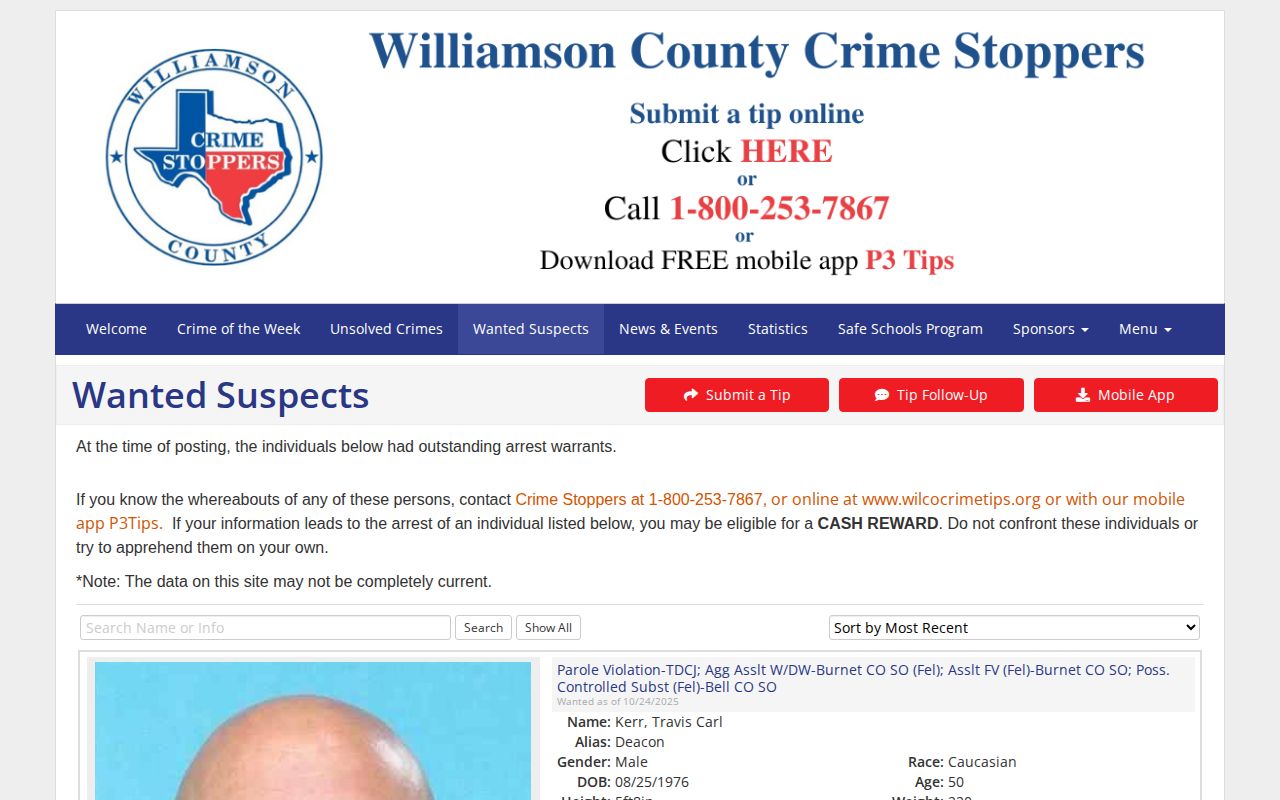
Tips and wanted listings share one page. The program keeps its anonymous reporting route right next to the agency-provided fugitive information rather than pulling names out on their own.
Williamson County Warrant Checks Are Not Centralized
Don't expect one office to hold every answer. The WCSO FAQ says Williamson County does not centralize its warrants. A city police department may keep the original paperwork when the offense happened inside city limits. Crime Stoppers helps, but it can't replace an actual warrant check. Who issued the warrant, which court it came from, and which municipality was involved all shape what a real answer looks like.
This is why a countywide label can mislead. A single incident in Round Rock, Georgetown, or Cedar Park might generate a municipal report, a county booking record, and a court file kept by three different offices. Start with the place and the agency. A profile photo or an old search result is not a starting point. When the agency is unclear, a court case number, a booking number, or a lawyer can point you to the right office.
The official WCSO warrant FAQ lays out the rules. A person seeking warrant information must visit the Sheriff's Office with photo ID, or have an attorney fax a request on official letterhead. The Warrant Division will not answer warrant questions by email or phone. The routing number on the county's transfer contacts, 512-943-1345, is not a confirmation line.
Note: A stale booking page, a wanted profile, or a search snippet cannot confirm that a warrant is still active.
The county's FAQ is the controlling public-access instruction for this process.
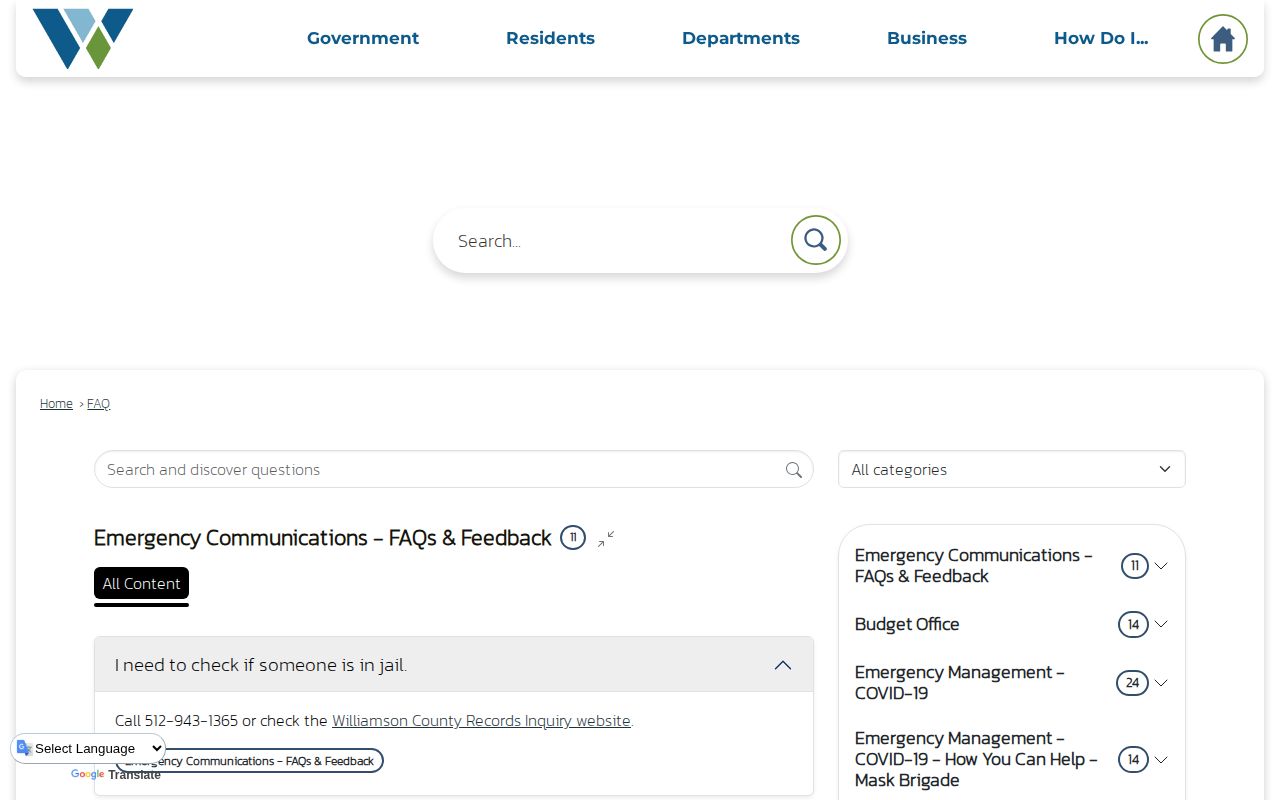
The source rule matters here. An informal phone tip about a warrant should never be confused with an official search result from the county.
Verify a Williamson County Warrant
Checking a specific warrant takes a careful, official path. Williamson County's stated rule is simple. No online name search. No answers by telephone. No answers by email. Keep the issuing jurisdiction, the ID requirement, and the legal weight of the process in view at every step. When a court case is involved, an attorney or the issuing court can point you to the right channel.
- Identify the likely agency and city connected to the event, because a municipal department may hold the original warrant.
- Use the Sheriff's Office in-person photo-identification process at 508 S Rock Street, Georgetown, TX 78626, when WCSO is the appropriate agency.
- Have an attorney use an official-letterhead fax when the FAQ's attorney route is appropriate.
- Do not rely on phone or email for warrant confirmation, even though 512-943-1345 is listed as a county routing contact.
- Check the issuing court and seek legal counsel for a response or court date, rather than trying to resolve a warrant through a public listing.
The county splits this work across roles. The Precinct 3 criminal-cases information and the Constables page describe the courts and the officers who serve warrants. Neither one offers a countywide public database. Treat them as windows into the process, not a lookup tool.
Williamson County Warrant Categories
County materials sort warrants into several categories. Fugitive units or court personnel may serve them. The categories work as a routing aid, nothing more. They are not an online index. They say nothing about any individual. Only the agency or court responsible for a given matter can confirm its status.
| Category named in county materials | Why a source check matters |
|---|---|
| Traffic | The issuing court or local agency may be the correct source. |
| Probation | Probation-related status requires the responsible court or agency. |
| Bond | A bond-related matter should be checked through the proper court channel. |
| Family-violence or sex-crime | These matters are sensitive and should never be inferred from a public name match. |
| Misdemeanor | The category does not reveal present status, case facts, or a disposition. |
| Felony | A court and agency record is needed before describing a warrant or charge. |
County materials treat the categories as a routing tool, nothing more. Only the responsible court or agency speaks with authority on any specific warrant.
Williamson County App and Court Boundaries
The Williamson County Sheriff App shares public-safety news, crime reports, and tips. An older local account mentioned a most-wanted feature. The current listing does not promise a complete roster. It offers no same-day booking feed and no public booking photos. Treat the app as an announcement and tip channel unless a live official view shows more.
For what happens after a warrant-related arrest or booking, the court route beats a news item or an app alert. The Williamson County Judicial Records portal allows public case searches under its restricted-record rules. Match a case with solid identifiers, like a cause number, rather than a name alone. A booking event or a wanted profile will not answer the final court question.
Custody tools answer different questions too. A Crime Stoppers notice wants tips about a wanted person. The Sheriff's app spreads public-safety information and takes tips. The jail search shows a booking or detention result. The court portal can display later case activity when access is allowed. Keeping these paths straight prevents false conclusions about where a person is, what their warrant status is, or how a case ended.